Author: Sheryl Bradnick
Chickens require access to clean water every single day. When people speak about poultry nutrition, they often focus on feed, vitamins, and medication, while overlooking the importance of water. This is why water is sometimes called “the forgotten nutrient.” Yet, water is just as vital as feed. Poor quality or insufficient water supply can quickly compromise bird health and performance.

Functions of Water:
• It is a component of blood, transporting nutrients in the body and carrying waste away.
• It lubricates joints to support movement.
• It moistens food and the digestive tract so feed passes easily down the esophagus (throat) into the crop.
• It softens feed in the crop, improving digestibility.
• It helps the digestive system to break down and absorb nutrients.
• It helps maintain a constant body temperature. Chickens do not sweat when they are hot, they pant, which increases their water intake to aid the cooling process.
Sources of Water
Natural water sources such as dams, rivers, or boreholes may be contaminated with pathogens like E. coli. It is wise to treat water from these sources with chlorine tablets or locally available water treatment products recommended by your agrovet.
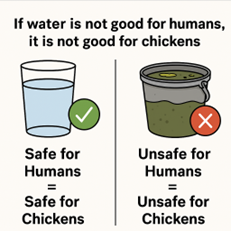
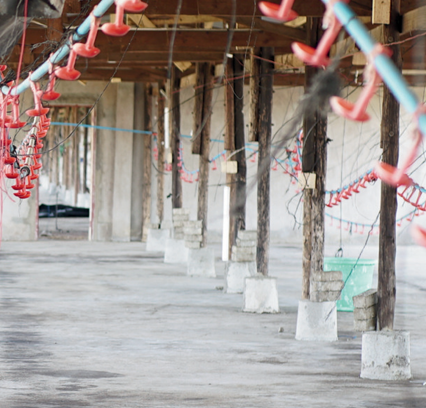
Remember that if the water quality is not good for humans, it is not good for chickens. If you would not drink the water yourself, it is not good enough to give to your chickens. Drinkers should be placed so that birds do not have to walk more than 1 meter, and water must be available 24 hours a day. Ensure storage capacity of at least 500 ml per bird. Make sure drinkers are checked frequently during the day.
Water Intake:
As in humans, chickens need plenty of good-quality water to stay healthy. A chick’s body is around 80% water, while a fully grown chicken is about 65%. With the exception of bone and fat, every part of a chicken’s body contains water. If chickens do not receive enough water, they will weaken quickly, stop growing, and may become sick. Birds also drink two parts water for every one part feed consumed. When water is restricted, they stop eating, and without eating, they cannot grow.
Temperature significantly affects water intake. For example, at 28°C, a 5-week-old broiler will eat about 150 g of feed and drink around 280 ml of water per day. At 30°C, the same chicken eats only 128 g but drinks 300 ml of water. This demonstrates how important it is to ensure birds have access to water at all times, and drinkers should be checked more frequently during hot seasons.
Water Storage
The optimum drinking water temperature is 10–13°C. If you are storing water in tanks and live in a hot climate, it is better to keep tanks under cover to prevent direct sunlight from heating the water. Ensure to clean water tanks between placements.
Drinker Management
It is also essential to keep drinkers clean. Clean them on a daily basis to prevent any biofilm buildup. This can be done with a scrubbing brush. When cleaning out a chicken house before a new flock is placed, it is important to let them dry out in the sun once cleaned. This will kill off any remaining bacteria. Make sure any chemicals used near drinkers are recommended by your agrovet, and rinsed off and dried before adding water to the drinker for the chickens.
Water Allocation Guide
• 100 chicks (0–3 weeks old) will drink approximately 10 litres per day.
• 100 broilers (3–7 weeks old) will drink approximately 25 litres per day.
• A laying hen can consume up to 400ml per day.
However, this allocation can be influenced by environmental factors such as stress or temperatures. Birds will consume more water on hotter days and less on colder days.
It is very important to consistently monitor drinkers to ensure birds have access to drinking water at all times.
Water is often the “forgotten nutrient”. Make sure you do not forget the importance of water, and to check your drinkers multiple times a day to ensure the whole flock has access to water 24/7.